The Nail Files: Tech Tips
Museum of Nails
Recap: Tech Tips
A live art installation in partnership with CultureHub LA
June 10, 2026
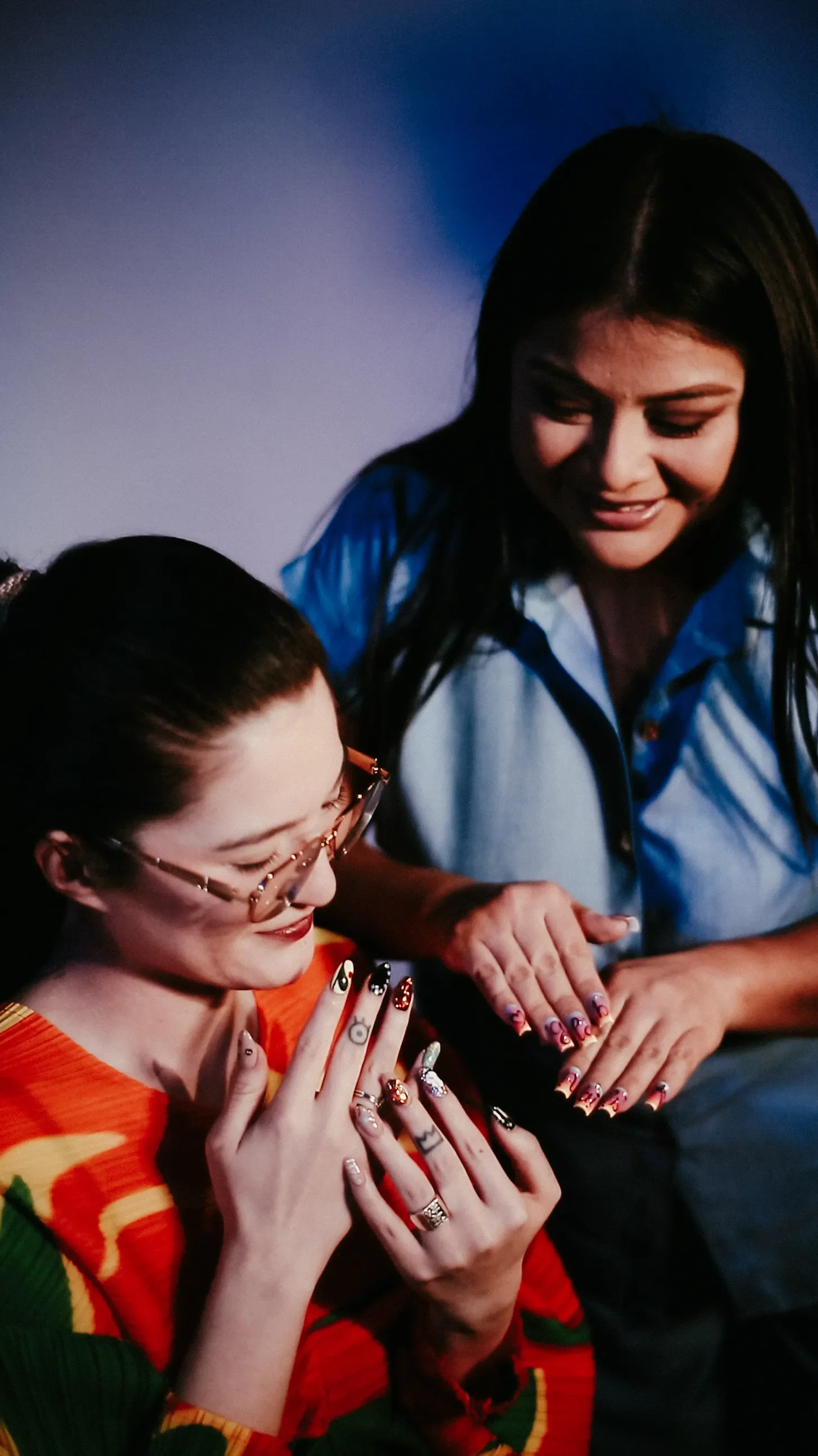
Museum of Nails Founder Arabelle Sicardi (Left) and Featured Nail Tech Gabriela Macedo (Right) - Photo by Heather Seybolt
One of the biggest concerns around the rise of artificial intelligence even before ChatGPT popped up on the scene was that it would take over people’s jobs. With AI image generation a growing fear is that it would take over the world of art. If there’s one thing we learned from our most recent installation, Tech Tips, it is that the nail tech industry has very little to fear in these regards.
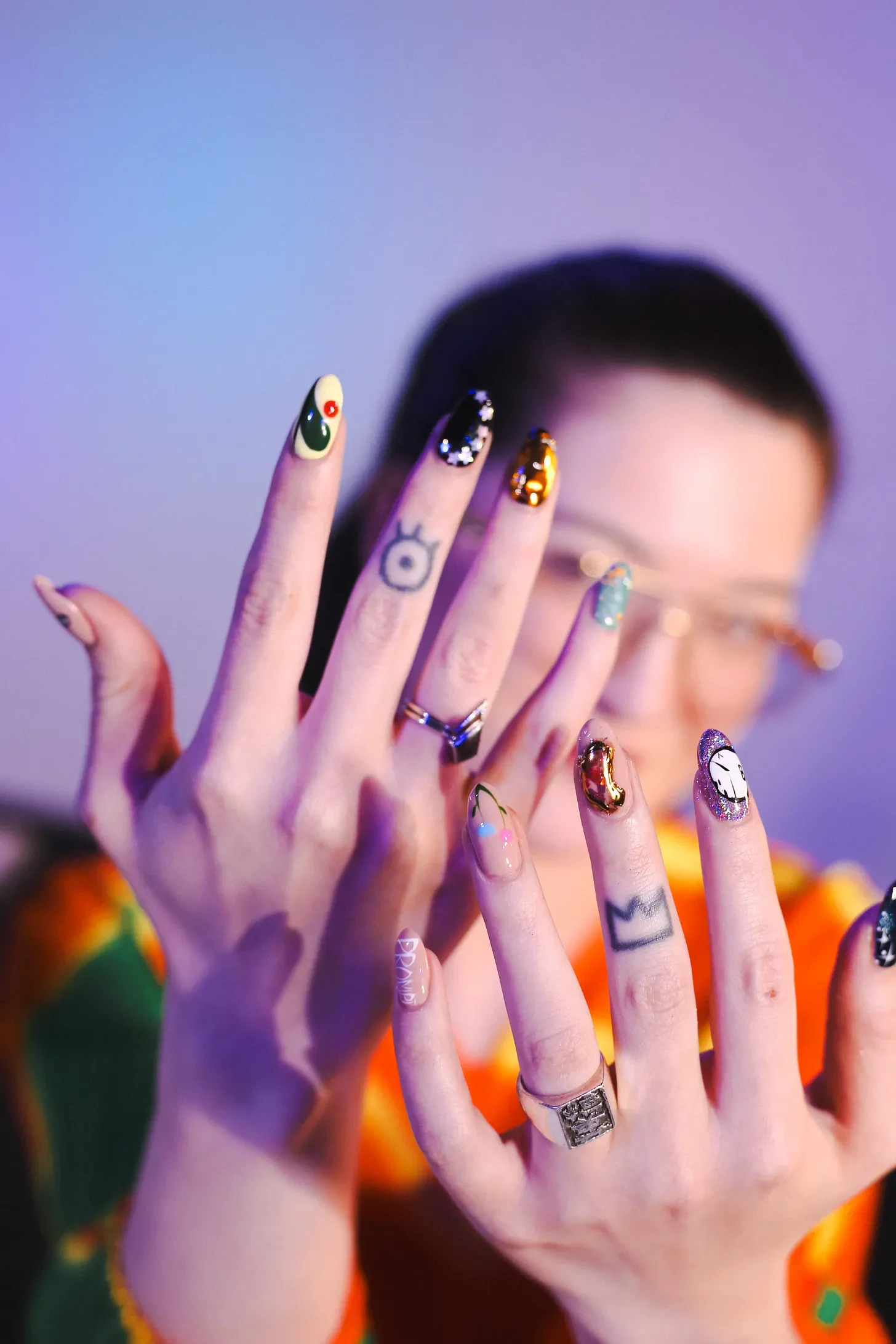
Arabelle’s Tech Tips Nails Set Done by Gabi - Photo by Heather Seybolt
We recently had the privilege of hosting our event Tech Tips at Culturehub LA as part of one of their artist residencies. During Tech Tips, the wonderful nail tech Gabriela Macedo was able to create the below set of acrylics for our founder Arabelle Sicardi based on a wide array of prompts that were submitted both to her and to an AI-image generator, by the audience watching the event livestream.
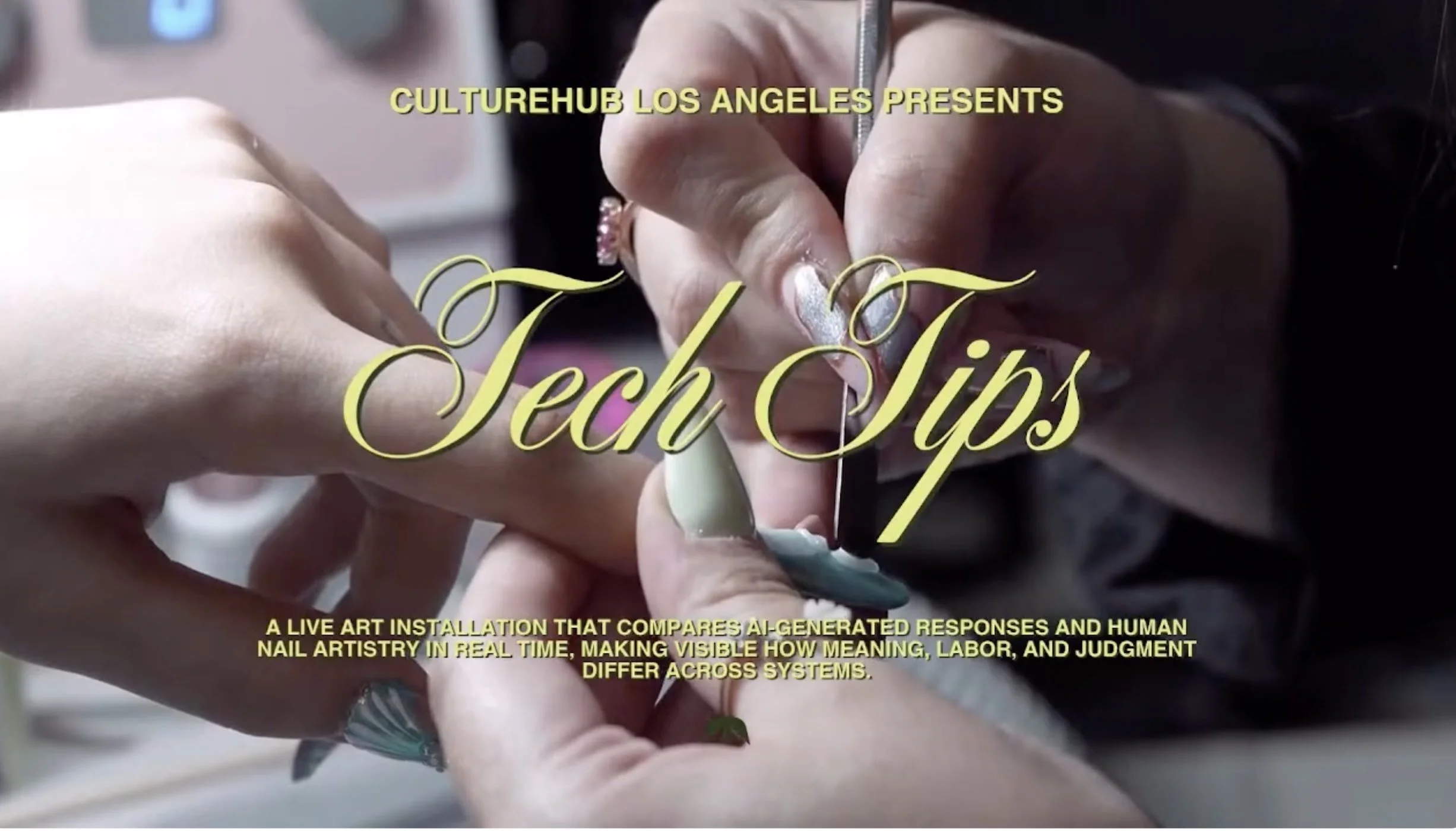
As each prompt came in, and was interpreted by the AI, Gabi provided great insight into the degree to which the AI’s output was possible.
Our goal was to put AI into conversation with a real artist, noting its environmental costs and thinking about what it would look like to use it as a collaborator. As our founder Arabelle said during the livestream: “This project has so much to do with personal usage and personal pleasure at the risk of a larger collective loss.” Estimating the water usage and resulting environmental damage of AI is notoriously hard because companies share the water usage of a single query but not the cost of training their models. One thing that is certain is that the number is larger than these companies are reporting. A New York Times article from July of last year spoke in detail about a Georgia county where water taps went dry and well water became unsafe after sediment built up due to Meta building a data center nearby.
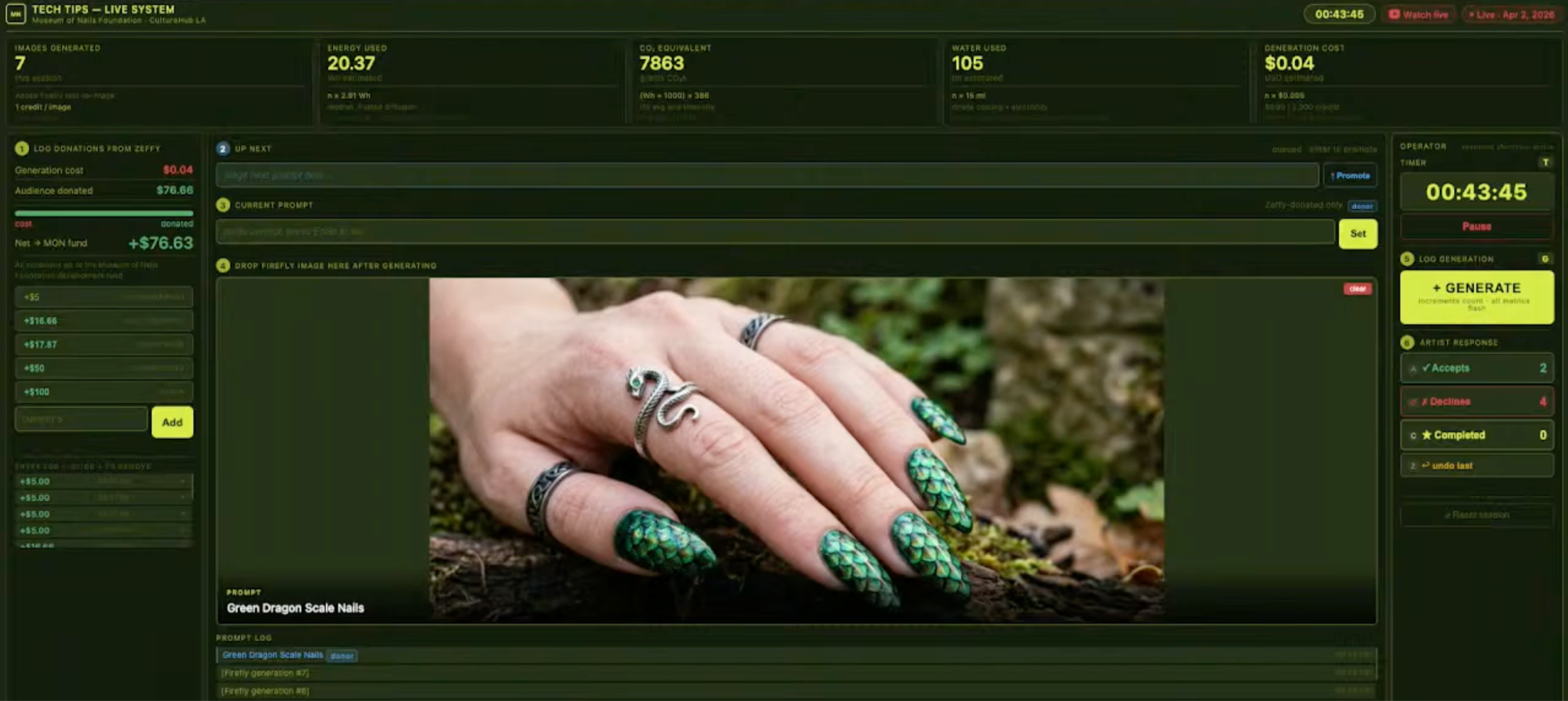
Screenshot of Image Produced by AI Model Based on the Prompt Green Dragon Scale Nails
At one moment during Tech Tips, the prompt was “green dragon nail scales” (pictured above). Gabi and Arabelle were enticed by the design created by the AI. However, Gabi went on to explain the difficulty with producing such a design. The distinct black shadows to each scale would be very difficult to create given the shimmer and glossiness that the design features would require catseye, which would have to be layered on top of a black base that is already difficult to cure because of its high pigmentation. Moreover, the distinct layers of scale would likely mean different layers of catseye for each row, but this would be distorted in the process, so the best choice would be to flatten the design into a stamp.
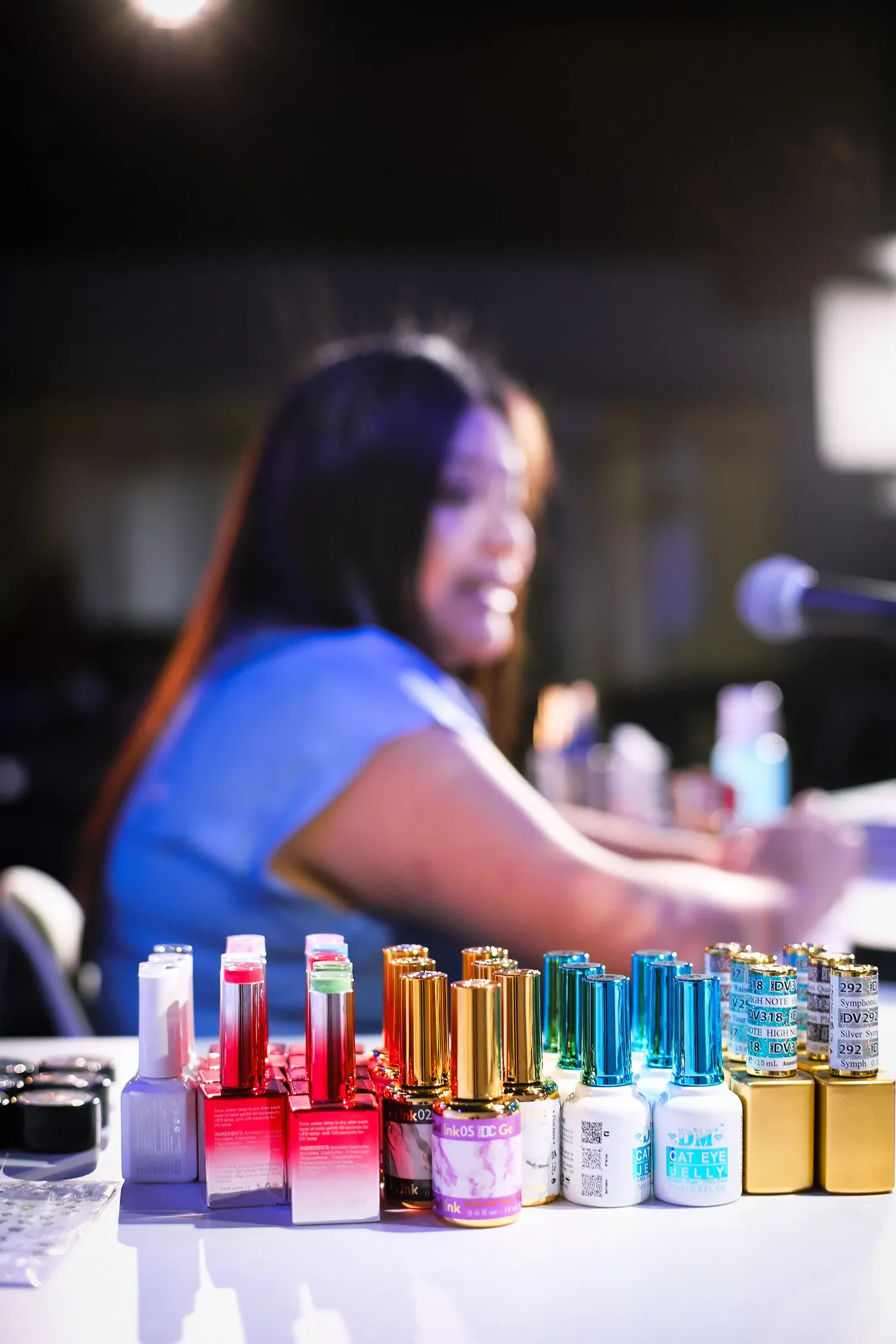
Array of Nail Polishes Used By Gabi During The Installation - Photo by Heather Seybolt
Gabi spoke in the livestream about how nowadays when a client brings in AI reference images it is a nail tech’s job to disillusion their client and be transparent about how designs like this can be inspiration for their nails, but direct copying is impossible. A week after the event I was able to talk about this negotiation with Gabi and she elaborated that many clients will understand, but some will not and they’ll ultimately ask for completely different designs because they had such a particular expectation that anything not perfect will disappoint.
On a similar wavelength to stubborn clients, Gabi spoke to me about the danger of these AI images for people new to the craft. During the pandemic there was a surge in people trying to do their nails at home, and thus a surge in people getting contact dermatitis from not curing their nails properly. With the rise of AI nail art, Gabi and I agree that people will be more enticed to explore the execution of these designs on themselves and might not have the know-how to accurately judge the feasibility. As a result, people are likely to hurt themselves in the process via contact dermatitis.
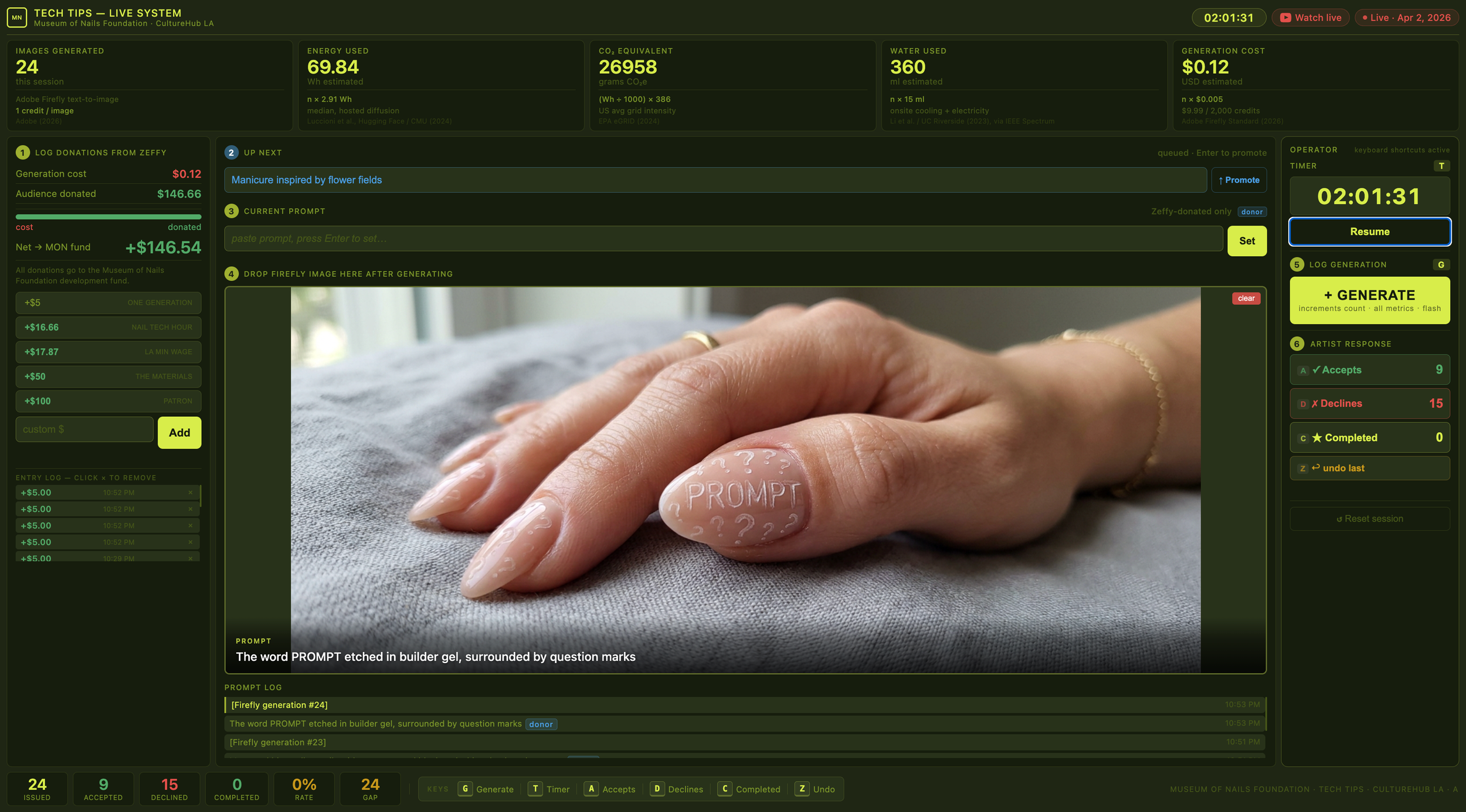
Final Dashboard Listing the Total Energy Usage and Water Consumption of Tech Tips
At the same time, we also thought about the possibility that AI nail art could inspire product makers in the nail industry, who might see a gap in the market for a product that would help actualize AI’s vision of nail art more closely. Of course, as Gabi noted to me this use of AI requires strong scientific grounding in the chemical make-up of nail products.
By the end of the installation Gabi had accepted 9 of the viewer-submitted prompts and rejected 15 based on the poor reference images created by A.I.
When asked by Arabelle whether she was surprised by the large amount of rejections Gabi said: “No, just because I knew that when you’re using AI and trying to create it in real life, it’s not going to work…When you have to bring that into reality you have to ask yourself can you do it? Can you not do it? And again, it’s also limited by the sizing of the nail bed. Can you really put all those details onto the nail? So I know that AI cannot replace nail techs and humans. Realistically, you need nail techs. You need people to do the work, do the labor, and AI just does it in seconds. But here, it takes practice, consistency in order for you to deliver the nails.”
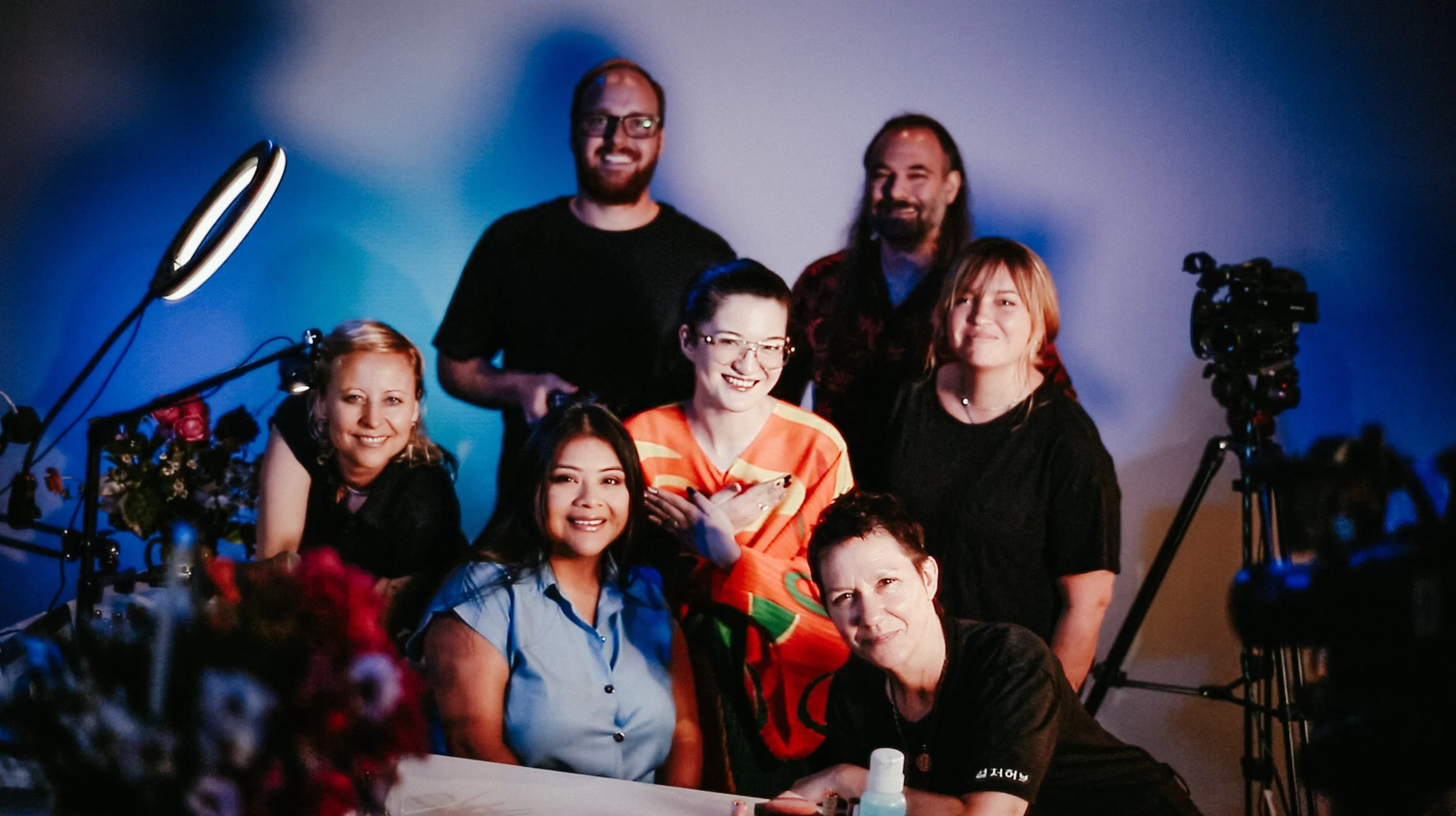
Photo by Heather Seybolt
The Museum of Nails Foundation is dedicated to archiving, celebrating, and educating about the impact of nail art around the world and the stories of the artists who create it. It is a living archive of the history of nail art, the nail industry, and the workers who have built it. It educates the beauty fan on the artistry and craft that goes into the practice, and the history behind the techniques, materials, and trends. It seeks to provide resources and solace to nail artists looking for help, comfort, education, and inspiration. It is also a cultural space of play and a networking hub for artists and creatives interested in collaborating together.