Interview with Helen Lin
Scribble
Interview with Helen Lin
July 27, 2026
Hi Helen! Can you introduce yourself & what you make?
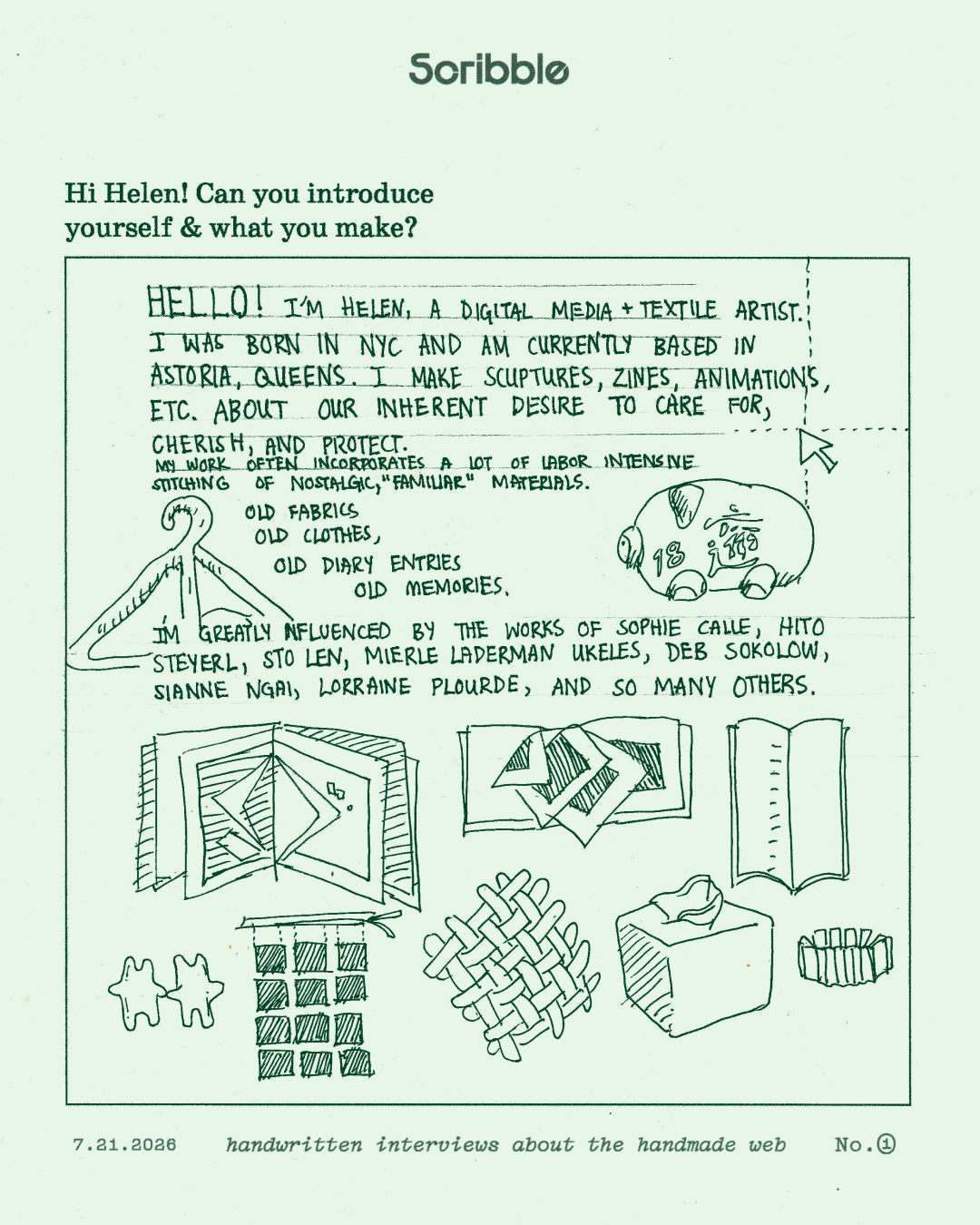
Hello! I’m Helen, a digital media + textile artist. I was born in NYC and am currently based in Astoria Queens. I make sculptures, zines, animations, etc. about our inherent desire to care for, cherish, and protect.
My work often incorporates a lot of labor intensive stitching of nostalgic, “familiar” materials.
Old fabrics,
Old clothes,
Old diary entries
Old memories.
I’m greatly influenced by the works of Sophie Calle, Hito Steyerl, Sto Len, Mierle Laderman Ukeles, Seb Sokolow, Sianne Ngai, Lorraine Plourde, and so many others.
You make things by hand, but also for hands, for people to touch and feel. What interests you creatively about hands?
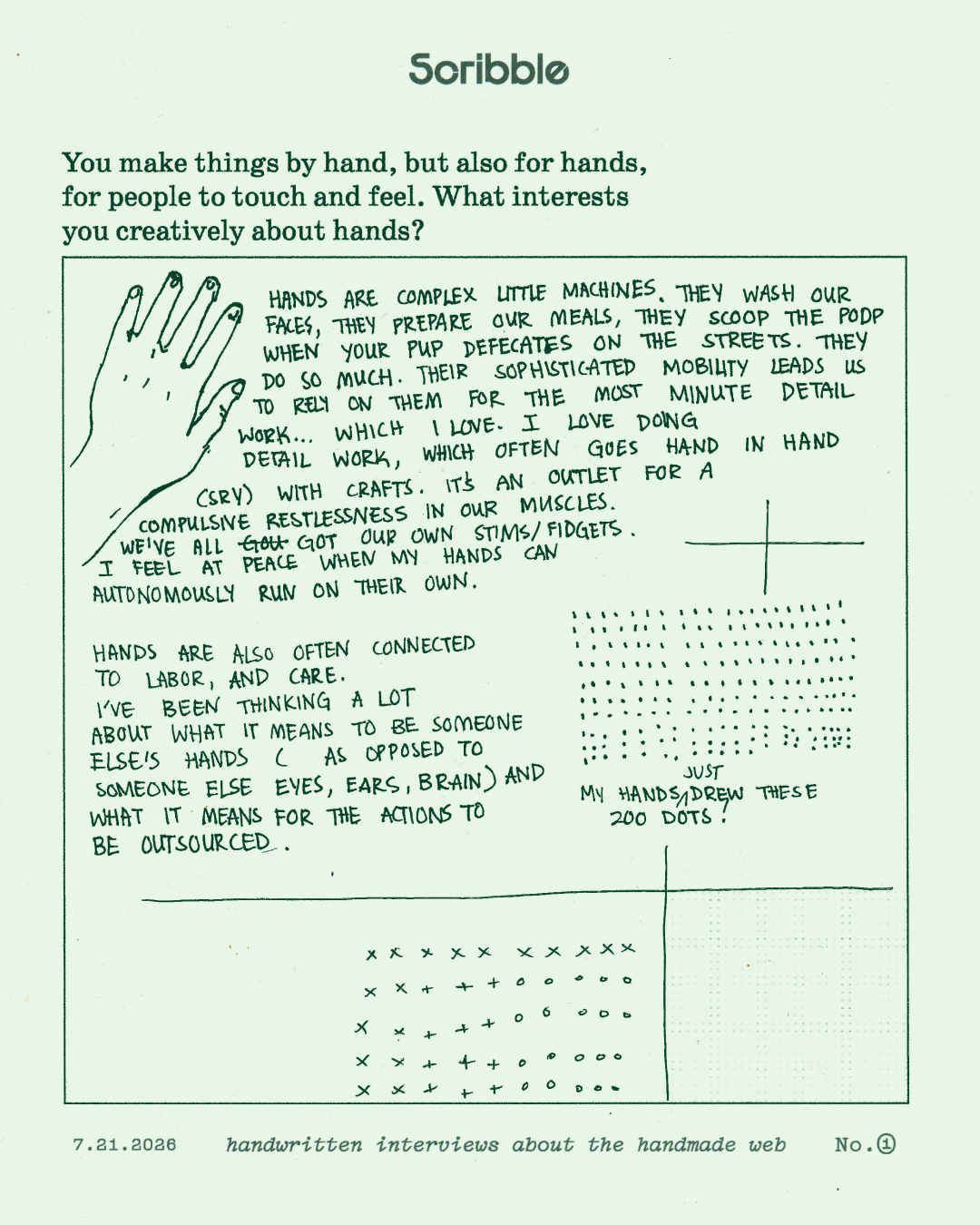
Hands are complex little machines. They wash our faces, they prepare our meals, they scoop the poop when your pup defecates on the streets. They do so much. Their sophisticated mobility leads us to rely on them for the most minute detail work…which I love. I love doing detail work, which often goes hand in hand (sry) with crafts. It’s an outlet for a compulsive restlessness in our muscles. We’ve all got our own stims/fidgets. I feel at peace when my hands can autonomously run on their own.
Hands are also often connected to labor, and care. I’ve been thinking a lot about what it means to be someone else’s hands (as opposed to someone else’s eyes, ears, brain) and what it means for the actions to be outsourced.
What first drew you to textiles as an art form?
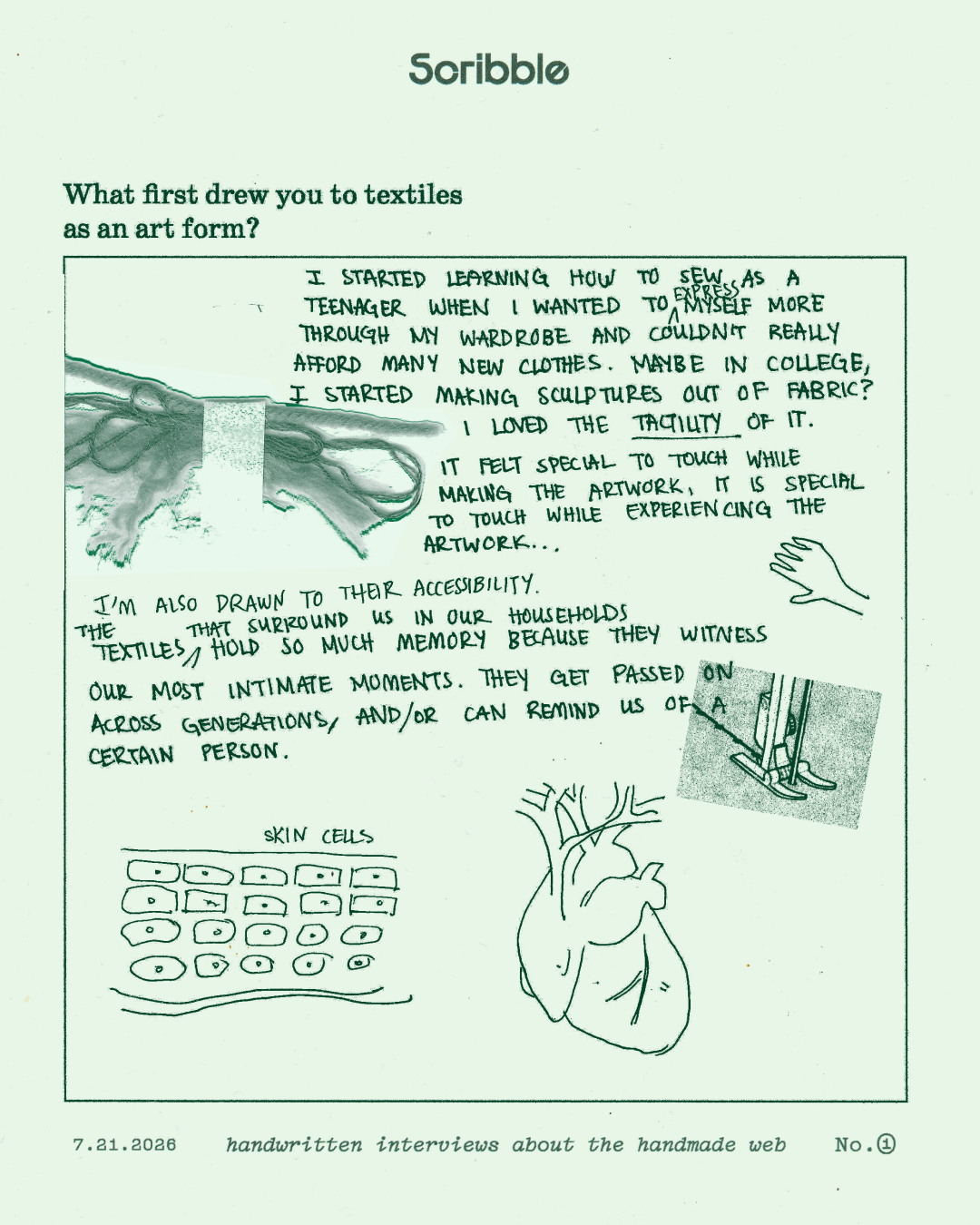
I started learning how to sew as a teenager when I wanted to express myself more through my wardrobe and couldn’t really afford many new clothes. Maybe in college, I started making sculptures out of fabric? I loved the tactility of it. It felt special to touch while making the artwork, it is special to touch while experiencing the artwork…
I’m also drawn to their accessibility. The textiles that surround us in our households hold so much memory because they witness our most intimate moments. They get passed on across generations, and/or can remind us of a certain person.
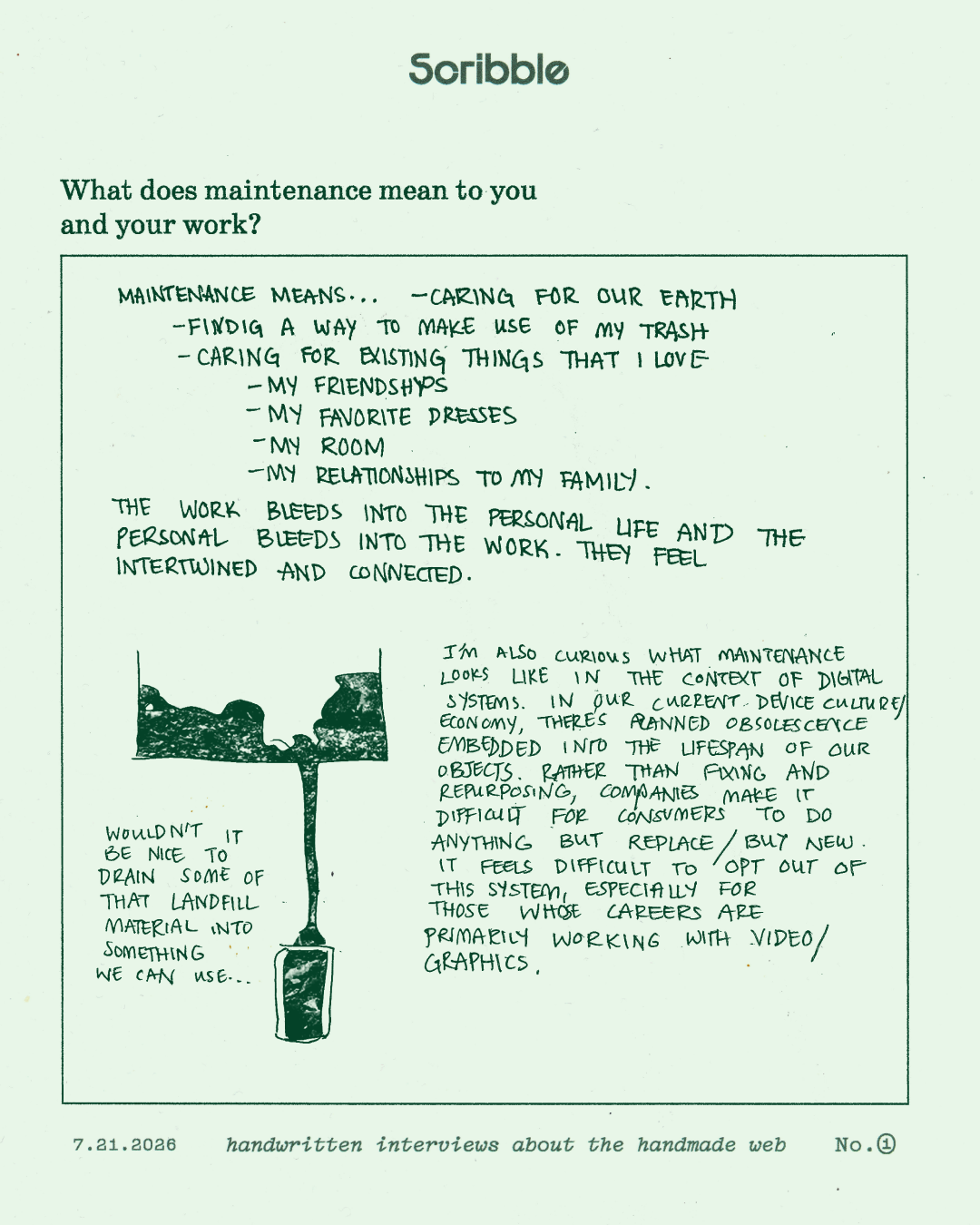
What does maintenance mean to you and your work?
Maintenance means…
—Caring for our earth
—Finding a way to make use of my trash
—Caring for existing things that I love
— My friendships
— My favorite dresses
— My room
— My relationships to my family.
The work bleeds into the personal life and the personal bleeds into the work. They feel intertwined and connected.
I’m also curious what maintenance looks like in the context of digital systems. In our current device culture/economy, there’s planned obsolescence embedded into the lifespan of our objects. Rather than fixing and repurposing, companies make it difficult for consumers to do anything but replace / buy new. It feels difficult to opt out of this system, especially for those whose careers are primarily working with video / graphics.
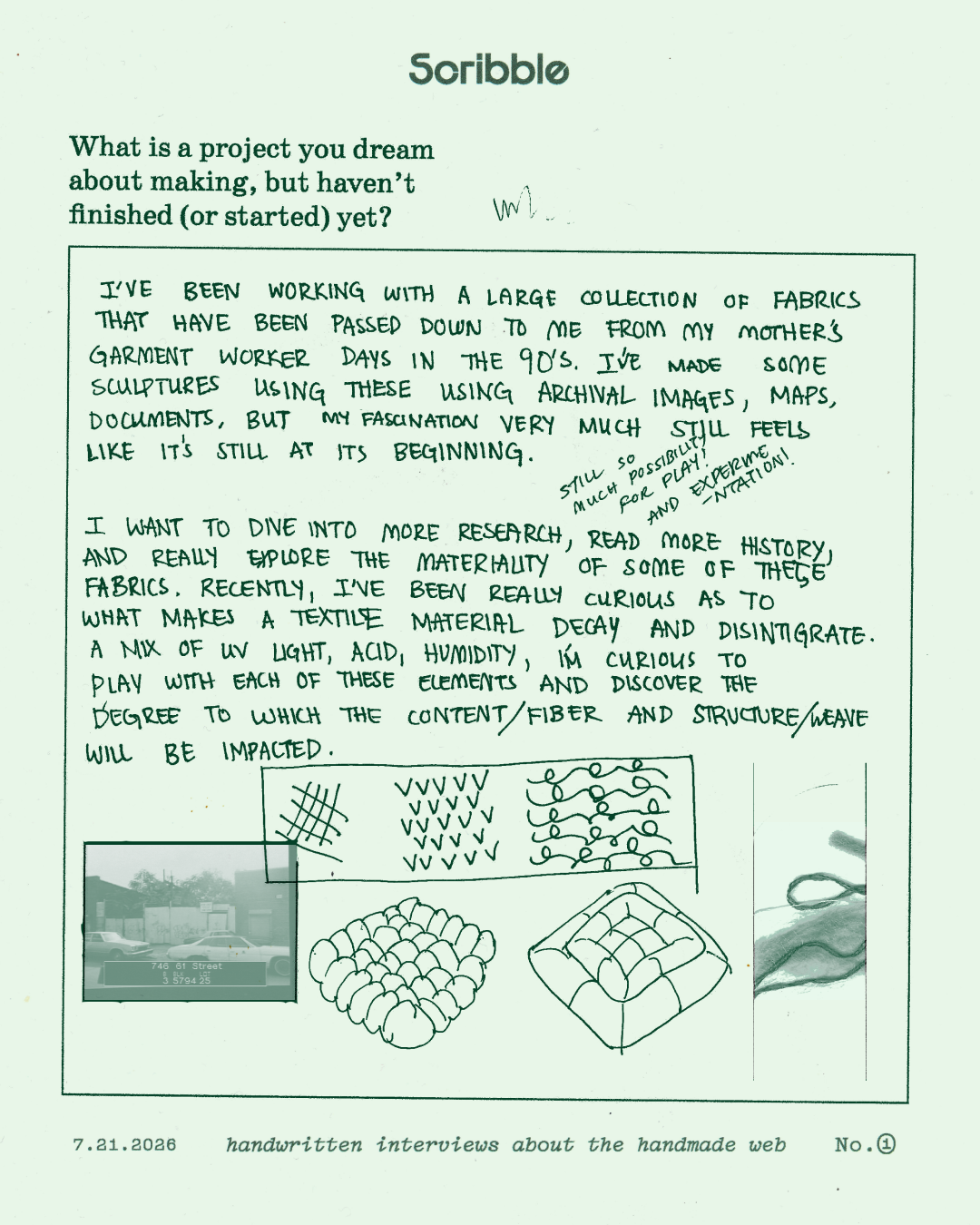
What is a project you dream about making, but haven’t finished (or started) yet?
I’ve been working with a large collection of fabrics that have been passed down to me from my mother’s garment worker days in the 90’s. I’ve made some sculptures using these archival images, maps, documents, but my fascination very much still feels like it’s still at its beginning.
Still so much possibility for play!
And experimentation!
I want to dive into more research, read more history, and really explore the materiality of some of these fabrics. Recently, I’ve been really curious as to what makes a textile material decay and disintegrate. A mix of UV light, acid, humidity, I’m curious to play with each of these elements and discover the degree to which the content/fiber and structure/weave will be impacted.
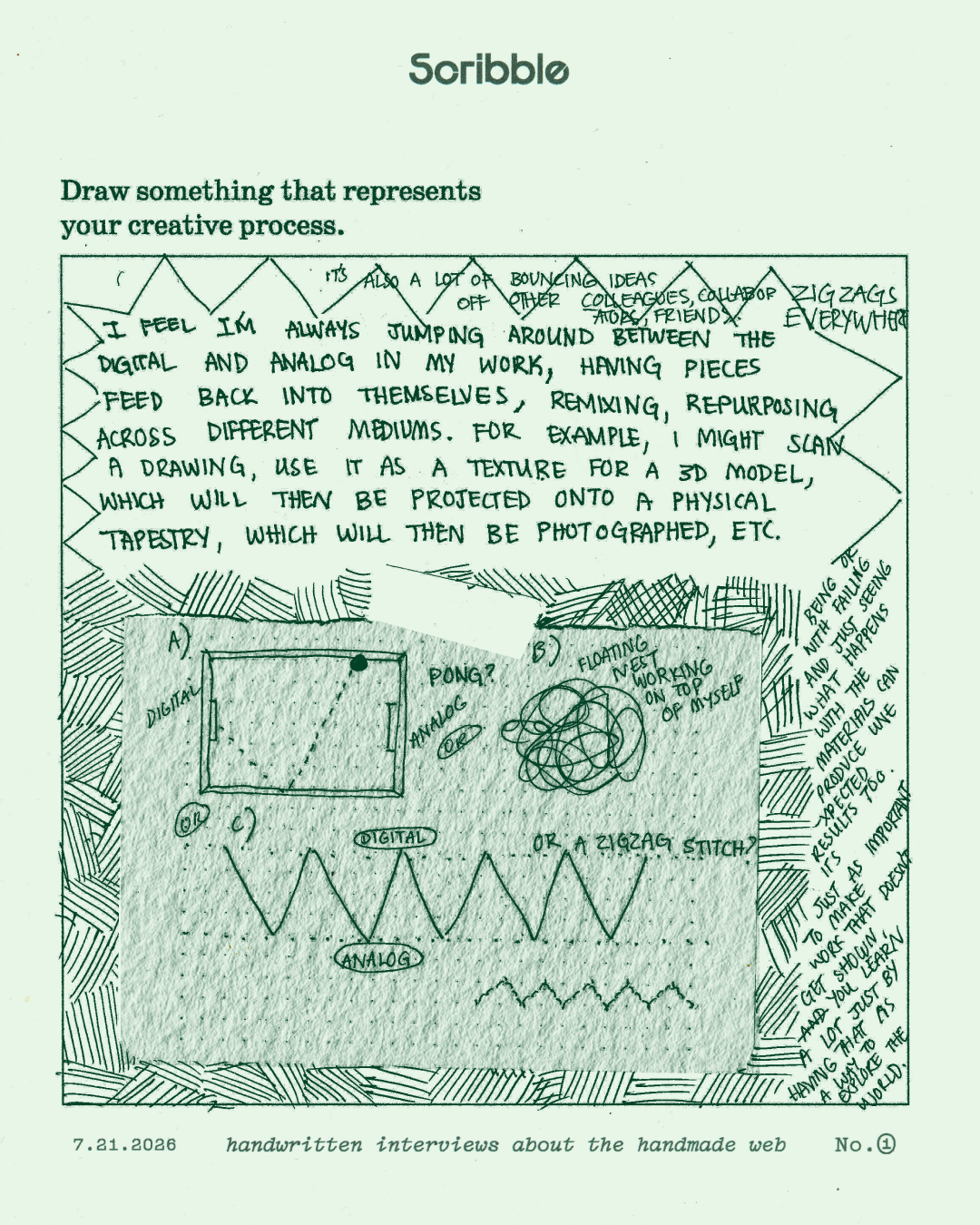
Draw something that represents your creative process.
Zigzags everywhere
It’s also a lot of bouncing ideas off other colleagues, collaborators, friends.
I feel I’m always jumping around between the digital and analog in my work, having pieces feedback into themselves, remixing, repurposing across different mediums. For example, I might scan a drawing, use it as a texture for a 3D model, which will then be projected onto a physical tapestry, which will then be photographed, etc.
Being ok with failing and just seeing what happens with the materials can produce unexpected results too. It’s just as important to make work that doesn’t get shown, you learn a lot just by having that as a way to explore the world.
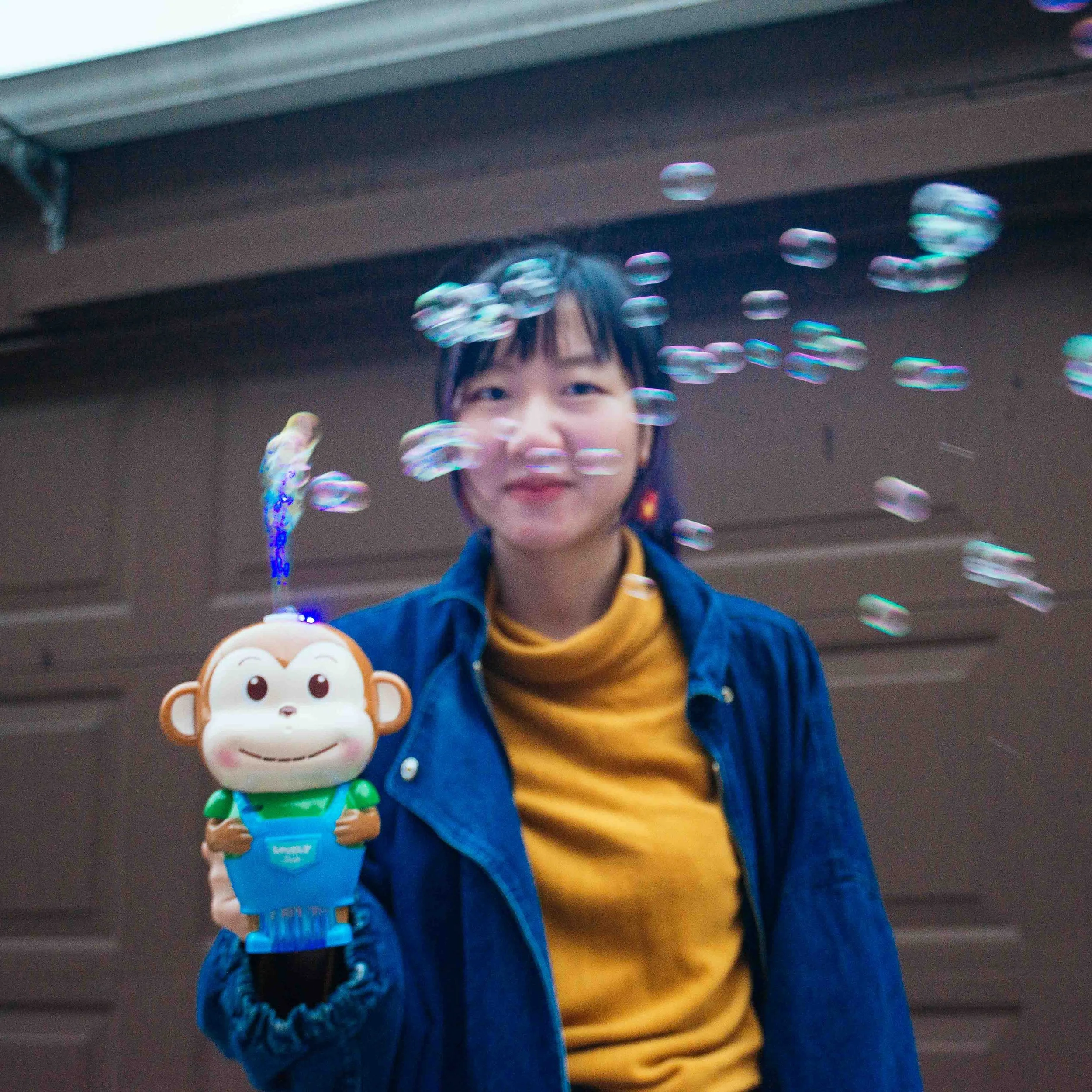
Helen Lin is an multidisciplinary artist born and raised in a first-generation Chinese-American immigrant family in Brooklyn, NY. She makes art with and for people who work with their hands, celebrating the importance and craft of maintenance. Through labor-intensive stitching of physical and digital forms, she reveals the melancholic undercurrents behind pop cultural artifacts. She holds a BA in Visual Arts and East Asian Studies from Princeton University and a MPS in Interactive Telecommunications from NYU’s Tisch School of the Arts.
helen-lin.com